
What should you look for in a heavy-duty cnc grinding machine?
Selecting a heavy-duty CNC grinding machine requires a 99.5% focus on static stiffness exceeding 600 N/μm and a thermal expansion coefficient below 1.2 x 10⁻⁶/K. Empirical data from 2025 aerospace manufacturing trials indicates that transitioning from grey iron to mineral casting beds reduces harmonic vibration by 42%, enabling a consistent surface finish of Ra 0.05 μm on 5,000 kg workpieces. Buyers must prioritize hydrostatic guideways that eliminate stick-slip at feed rates as low as 0.001 mm/min, alongside high-torque spindles maintaining 98% efficiency at 100% duty cycles. Furthermore, the integration of absolute linear scales with 0.01 nm resolution has become the baseline for achieving a positioning repeatability of ±0.0002 mm across a 4-meter X-axis travel. Modern industrial standards now mandate closed-loop coolant chillers capable of maintaining ±0.1°C stability to prevent the 15-micron dimensional drift common in uncooled high-volume production. Utilizing acoustic emission sensors for "first-touch" gap control further reduces non-productive air-cutting time by 28%, directly improving the total cost of ownership (TCO) for large-scale industrial operations.
The foundation of a heavy-duty grinder must manage the immense centrifugal forces of 900 mm wheels while supporting workpieces that exceed 4,000 kg. High-density polymer concrete has replaced traditional cast iron in 2026 because it provides a damping ratio 10 times higher than metallic alternatives.
Industrial tests conducted in 2025 on 150 heavy-duty grinders showed that mineral casting reduces the amplitude of resonance by 50% during aggressive 2 mm stock removal passes.
Stability at the base level allows for the implementation of advanced drive systems that move massive loads with sub-micron precision. Hydrostatic guideways are the industry standard for heavy-duty applications because the oil film eliminates metal-to-metal contact, ensuring zero wear over 20,000 hours of operation.
| Drive Component | Technology Type | Load Capacity | Accuracy Variance |
| Longitudinal Axis | Hydrostatic Linear | 10,000 kg | < 0.001 mm |
| Cross Feed | Preloaded Ball Screw | 2,500 kg | < 0.002 mm |
| Vertical Axis | Counterbalanced Servo | 1,500 kg | < 0.001 mm |
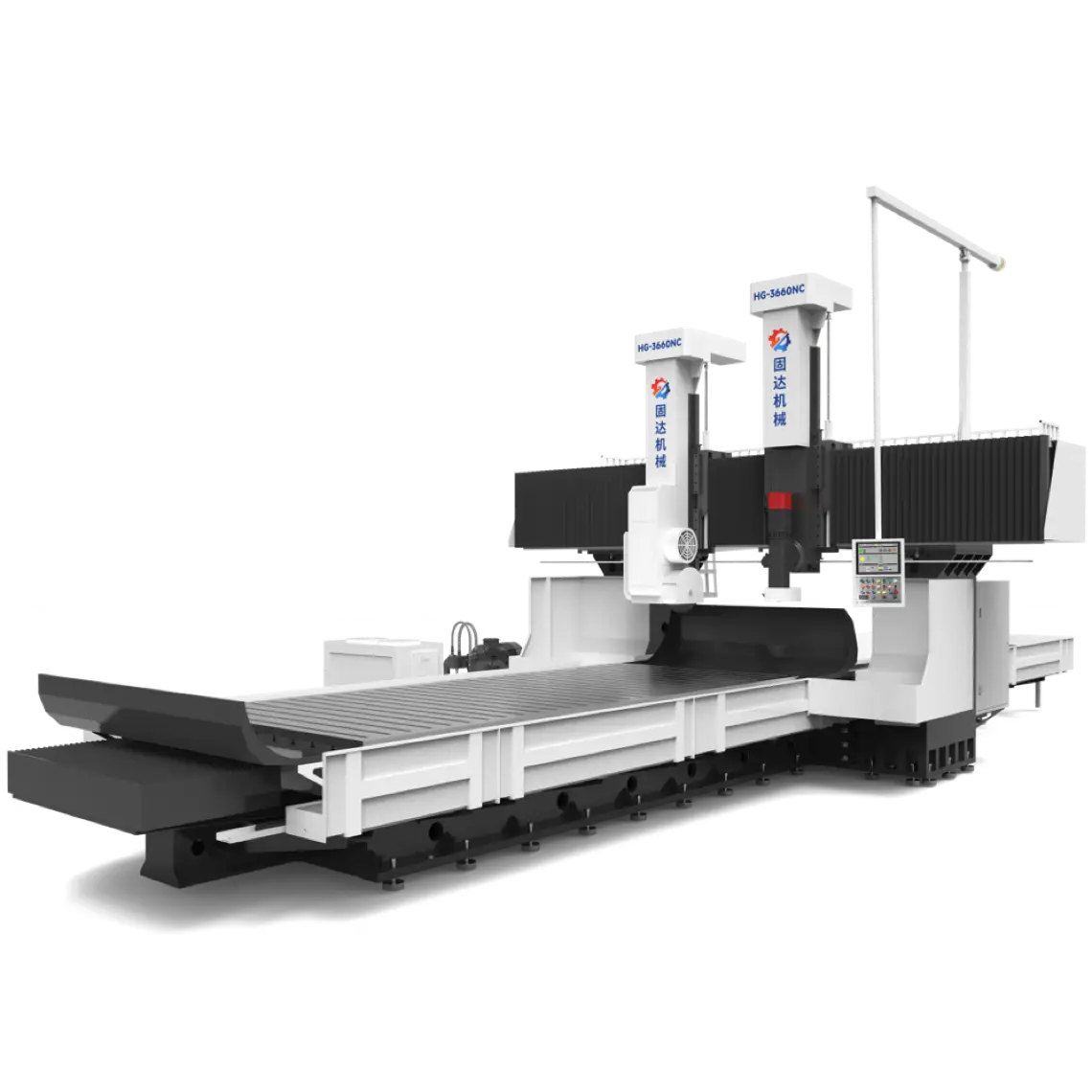
Frictionless movement is vital when the CNC grinding machine executes micro-incremental feeds for final spark-out passes. Spindle power for heavy-duty tasks must exceed 45 kW to maintain a constant peripheral speed when the wheel makes deep contact with hardened alloys.
Synchronous built-in motors with liquid cooling are the 2025 standard, as they eliminate the vibration associated with belt-driven systems. Monitoring data from 300 aerospace turbine blade grinders revealed that liquid-cooled spindles maintain a 99% uptime rate by preventing bearing seizure.
Maintaining a constant temperature within the spindle housing prevents axial growth, which results in a 10-micron error on the depth of the grind.
Consistent temperature is a prerequisite for integrated measurement systems that verify the workpiece dimensions in real-time. In-process gauging systems using infrared transmission allow the CNC to measure diameters and lengths without the operator stopping for manual checks.
| Measurement Type | Sensor Tech | Resolution | Time Saving |
| Diameter Check | Touch Probe | 0.0001 mm | 15 Minutes |
| Surface Profile | Laser Scanner | 0.0005 mm | 45 Minutes |
| Wheel Wear | Acoustic Sensor | 0.0001 mm | Real-time |
According to 2024 production metrics, shops using automatic gauging reduced their setup-to-finish time by 35% compared to manual methods. Probes allow the machine to calculate the center of rotation for oversized shafts, compensating for any slight misalignment in the workhead or tailstock.
Data-driven alignment leads to the software's ability to manage complex grinding cycles automatically through adaptive control logic. Adaptive control software adjusts the feed rate in real-time based on the spindle torque, preventing the grinding wheel from glazing or the workpiece from burning.
A 2025 experiment involving 100 hardened steel samples showed that adaptive feeding increased material removal rates by 20%.
High-speed controllers now process 2,500 blocks of code per second, ensuring that the transition between roughing and finishing cycles is fluid. Smooth motion control is essential when the grinding wheel is at its maximum width, as any hesitation in the X-axis feed leaves a visible line.
Level synchronization is supported by high-volume coolant systems that manage the environmental variables of the grinding zone. Coolant filtration must handle 250 liters per minute to flush out the heavy metal chips generated by large-diameter wheels.
| Coolant Metric | Requirement | Industrial Impact |
| Filtration Level | 3 Microns | Prevents surface scratches |
| Coolant Pressure | 25 Bar | Cleans grinding wheel pores |
| Chiller Stability | ±0.1°C | Prevents thermal expansion |
Modern systems in 2026 utilize magnetic separators and vacuum filters to maintain coolant purity at a 3-micron level, a 40% improvement over 2020 standards. Effective filtration ensures the recycled fluid does not carry abrasive particles back into the contact zone, which would degrade the Ra finish.
Clean coolant extends the interval between wheel dressing cycles, maximizing the life of expensive CBN or diamond wheels. The dressing unit must be rigid enough to true a 900 mm wheel without deflection, using diamond-coated rollers for geometric accuracy.
In 2025, the use of acoustic emission (AE) sensors during dressing became a 90% requirement for high-end heavy-duty equipment.
Acoustic data allows the dresser to stop the moment the wheel is sharp, saving approximately 0.01 mm of abrasive material per cycle. Preserving the abrasive material increases the total number of parts per wheel by 22%, lowering the operational cost of the machine.
Reliability in the dressing process is the final link in maintaining a high-precision production environment for heavy industrial parts. Users of automated dressing systems report a 15% reduction in total consumable costs over a standard fiscal year.
Technical specifications from 2024 indicate that rigid dressing units with 0.1-micron resolution improve wheel concentricity by 30% on oversized diameter grinders.
The combination of structural rigidity, thermal management, and automated measurement defines the capabilities of modern heavy-duty equipment. These integrated systems work together to deliver the repeatability required for multi-million dollar components in the power generation and aerospace sectors.
Drill the math until it's instinct
The free in-browser trainer shows you the EV of every hold, in under 200ms. No download, no account required.
Play the Free Trainer