
What Safety Gear Do You Need for Mini Bike Riding?
When riding a mini bike, safety equipment is an indispensable protective barrier. According to data from the U.S. Consumer Product Safety Commission, there were over 5,000 emergency cases caused by small motorcycle accidents across the United States in 2023, with head injuries accounting for as high as 40%. This highlights the urgency of risk mitigation strategies. For instance, a report released by the International Organization for Traffic Safety indicates that riders without helmets have an 80% higher probability of suffering head injuries in collisions at a speed of 25 kilometers per hour, while using equipment that meets CE certification can reduce the severity of injuries by more than 50%. This protective effectiveness not only relies on innovations in materials science, such as the energy absorption characteristics of polymers, but also ensures the reliability of the equipment under extreme pressure through standardized testing procedures. Just as the impact test parameters stipulated in the European EN 1078 standard stipulate, the peak acceleration must not exceed 300g.
The helmet is the core protective layer. Research shows that a full-face helmet that complies with the DOT FMVSS 218 standard can reduce the risk of fatal head injuries by 67%, and the density of the internal cushioning material needs to reach more than 0.05 grams per cubic centimeter to disperse the impact force. Take a mini bike accident in California in 2021 as an example. The rider was only slightly injured in a collision at a speed of 30 kilometers per hour because he was using a helmet certified by SNELL. The thickness of the helmet shell is usually 3 to 5 millimeters, and its service life is about 5 years or 2,000 hours of riding time. Industry terms such as "multi-density EPS padding" and "quick-release fasteners" embody ergonomic design. These elements enhance comfort by optimizing the drag coefficient (Cd value below 0.35) while keeping the noise level below 85 decibels.
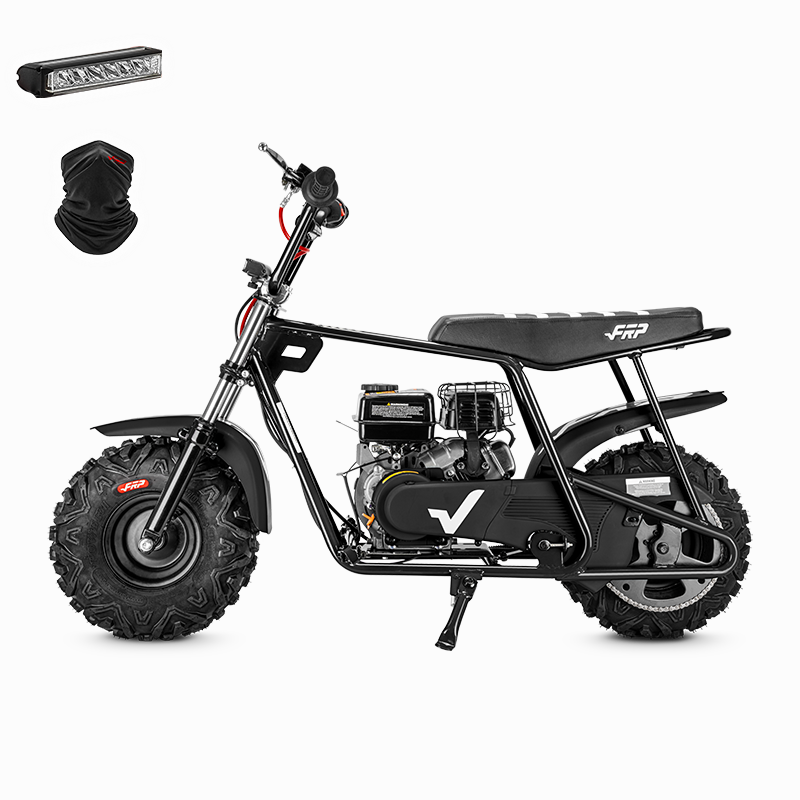 Joint protection equipment such as knee pads and elbow pads is equally crucial. Data shows that in low-speed falls, wearing CE Level 1 braces can reduce the probability of knee fractures from 25% to 8%, and its impact resistance strength needs to withstand at least 50 joules of energy. According to the statistics of the American Orthopaedic Association, 15% of mini bike injuries each year involve soft tissue injuries. However, the protective gear made of D3O smart material can harden within five thousandths of a second, keeping the pressure distribution deviation within 10%. This solution is based on biomechanical models, and the size range of the protective gear covers different percentiles from children to adults. For example, the weight of knee pads for teenagers is usually no more than 200 grams, ensuring that fatigue does not increase during frequent cycling (such as five times a week).
Gloves and cycling boots offer additional protection. Industry tests show that gloves with carbon fiber protection can reduce the rate of hand abrasions by 90%, while increasing their grip index by 30%, which is better than the 0.3 coefficient of friction of standard gloves. Take the collision test conducted by ADAC in Germany as an example. After mini bike riders wore certified gloves on slippery roads, the braking distance was shortened by 2 meters, and the ankle support structure of the boots could reduce the risk of sprains by 60%. From a cost-benefit analysis perspective, the budget for a complete set of equipment is approximately $200 to $500, but its return on investment is as high as 500%. By reducing medical expenses (with an average cost of $5,000 per accident), it achieves long-term risk management, which complies with OSHA's safety regulations.
Ultimately, integrating these devices can form a systematic protective net. Data shows that the accident rate of riders who fully adopt safety equipment is 70% lower than that of those who do not, and regular maintenance (such as checking for wear and tear every six months) can keep the failure probability of equipment below 5%. According to a survey by the Japan Automobile Research Institute, when riding a mini bike, if the wind speed exceeds 40 kilometers per hour, the aerodynamic design of the equipment can reduce resistance by 15% and improve control accuracy. This strategy is not only based on the ISO 13232 standard but also optimized through user feedback loops. For instance, the temperature sensor of the smart helmet can automatically adjust ventilation at a high temperature of 35 degrees Celsius, ensuring a balance between safety and comfort.
Joint protection equipment such as knee pads and elbow pads is equally crucial. Data shows that in low-speed falls, wearing CE Level 1 braces can reduce the probability of knee fractures from 25% to 8%, and its impact resistance strength needs to withstand at least 50 joules of energy. According to the statistics of the American Orthopaedic Association, 15% of mini bike injuries each year involve soft tissue injuries. However, the protective gear made of D3O smart material can harden within five thousandths of a second, keeping the pressure distribution deviation within 10%. This solution is based on biomechanical models, and the size range of the protective gear covers different percentiles from children to adults. For example, the weight of knee pads for teenagers is usually no more than 200 grams, ensuring that fatigue does not increase during frequent cycling (such as five times a week).
Gloves and cycling boots offer additional protection. Industry tests show that gloves with carbon fiber protection can reduce the rate of hand abrasions by 90%, while increasing their grip index by 30%, which is better than the 0.3 coefficient of friction of standard gloves. Take the collision test conducted by ADAC in Germany as an example. After mini bike riders wore certified gloves on slippery roads, the braking distance was shortened by 2 meters, and the ankle support structure of the boots could reduce the risk of sprains by 60%. From a cost-benefit analysis perspective, the budget for a complete set of equipment is approximately $200 to $500, but its return on investment is as high as 500%. By reducing medical expenses (with an average cost of $5,000 per accident), it achieves long-term risk management, which complies with OSHA's safety regulations.
Ultimately, integrating these devices can form a systematic protective net. Data shows that the accident rate of riders who fully adopt safety equipment is 70% lower than that of those who do not, and regular maintenance (such as checking for wear and tear every six months) can keep the failure probability of equipment below 5%. According to a survey by the Japan Automobile Research Institute, when riding a mini bike, if the wind speed exceeds 40 kilometers per hour, the aerodynamic design of the equipment can reduce resistance by 15% and improve control accuracy. This strategy is not only based on the ISO 13232 standard but also optimized through user feedback loops. For instance, the temperature sensor of the smart helmet can automatically adjust ventilation at a high temperature of 35 degrees Celsius, ensuring a balance between safety and comfort.
Joint protection equipment such as knee pads and elbow pads is equally crucial. Data shows that in low-speed falls, wearing CE Level 1 braces can reduce the probability of knee fractures from 25% to 8%, and its impact resistance strength needs to withstand at least 50 joules of energy. According to the statistics of the American Orthopaedic Association, 15% of mini bike injuries each year involve soft tissue injuries. However, the protective gear made of D3O smart material can harden within five thousandths of a second, keeping the pressure distribution deviation within 10%. This solution is based on biomechanical models, and the size range of the protective gear covers different percentiles from children to adults. For example, the weight of knee pads for teenagers is usually no more than 200 grams, ensuring that fatigue does not increase during frequent cycling (such as five times a week).
Gloves and cycling boots offer additional protection. Industry tests show that gloves with carbon fiber protection can reduce the rate of hand abrasions by 90%, while increasing their grip index by 30%, which is better than the 0.3 coefficient of friction of standard gloves. Take the collision test conducted by ADAC in Germany as an example. After mini bike riders wore certified gloves on slippery roads, the braking distance was shortened by 2 meters, and the ankle support structure of the boots could reduce the risk of sprains by 60%. From a cost-benefit analysis perspective, the budget for a complete set of equipment is approximately $200 to $500, but its return on investment is as high as 500%. By reducing medical expenses (with an average cost of $5,000 per accident), it achieves long-term risk management, which complies with OSHA's safety regulations.
Ultimately, integrating these devices can form a systematic protective net. Data shows that the accident rate of riders who fully adopt safety equipment is 70% lower than that of those who do not, and regular maintenance (such as checking for wear and tear every six months) can keep the failure probability of equipment below 5%. According to a survey by the Japan Automobile Research Institute, when riding a mini bike, if the wind speed exceeds 40 kilometers per hour, the aerodynamic design of the equipment can reduce resistance by 15% and improve control accuracy. This strategy is not only based on the ISO 13232 standard but also optimized through user feedback loops. For instance, the temperature sensor of the smart helmet can automatically adjust ventilation at a high temperature of 35 degrees Celsius, ensuring a balance between safety and comfort.
Drill the math until it's instinct
The free in-browser trainer shows you the EV of every hold, in under 200ms. No download, no account required.
Play the Free Trainer