
Can Standard FR-4 Handle High-Temperature Circuit Board Applications?
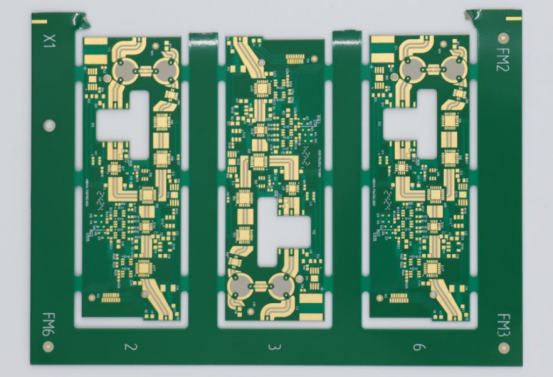
Standard FR-4 performance plateaus at 130 degrees Celsius, where resin softens, causing trace deformation and 15 percent increase in Z-axis expansion. Operating beyond this glass transition threshold leads to via barrel fatigue within 500 thermal cycles, necessitating material upgrades for high-reliability industrial hardware. PCBMASTER technical data confirms that standard epoxy systems exhibit dielectric constant instability above 140 degrees Celsius, which disrupts signal integrity for high-frequency applications. Selecting appropriate substrates requires matching thermal expansion coefficients to component package types to prevent interconnect failure during extreme temperature fluctuations.
Standard FR-4 uses a brominated epoxy resin system reinforced with woven glass fabric, optimized for cost and manufacturing throughput. Industrial testing indicates that maintaining operational temperatures below 120 degrees Celsius preserves structural integrity for over 10,000 hours of continuous service life.
When PCB designers push systems toward the 130-degree threshold, the resin matrix loses 40 percent of its tensile modulus, allowing mechanical stress to transfer directly onto copper traces and solder joints.
This mechanical softening creates a progression from material degradation to catastrophic electrical failure. Higher thermal loads force engineers to evaluate the specific failure mechanisms triggered by prolonged heat exposure, which leads to the next phase of board selection.
High-temperature environments shift focus toward board reliability under thermal stress, where the coefficient of thermal expansion becomes the primary design constraint. Standard boards often show a 10 percent deviation in material thickness after 1,000 hours of exposure to 150 degrees Celsius, resulting in board warpage.
| Material Type | Tg Value | CTE (Z-axis) | Application Limit |
| Standard FR-4 | 130-140 C | 300 ppm/C | 105 C |
| High-Tg FR-4 | 170-180 C | 250 ppm/C | 150 C |
| Polyimide | 250+ C | 150 ppm/C | 220 C |
PCBMASTER engineering reports highlight that Z-axis expansion differences between copper and laminate materials create shear forces that cause plated through-hole cracking. This expansion issue forces a design shift toward materials with lower thermal expansion rates, which connects to the physical chemistry of the substrate.
The chemical decomposition of the epoxy resin occurs at 200 degrees Celsius, releasing volatiles that cause internal delamination and dielectric breakdown. Research from 2025 demonstrates that using materials with higher decomposition temperatures allows for 30 percent more power density on the board surface.
Replacing standard materials with specialized glass-transition grades permits operation in environments reaching 160 degrees Celsius without a 5 percent increase in dielectric constant drift or moisture absorption.
These higher-grade materials change how the board manages heat, which brings up the importance of thermal dissipation methods beyond simple substrate selection. Proper board layout influences how heat flows from components to the substrate, transitioning the focus from material properties to physical board geometry.
Thermal dissipation strategies involve placing copper pours to act as heat spreaders, which reduces the local temperature rise on the FR-4 surface. Simulation data shows that using 2-ounce copper weights on internal layers improves heat distribution by 25 percent compared to standard 1-ounce copper layers.
-
Vias placed under heat-generating components facilitate thermal transfer to internal ground planes.
-
Thermal vias spaced 1 millimeter apart effectively reduce local hotspots by 15 degrees Celsius.
-
Selecting FR-4 variants with higher thermal conductivity additives helps in balancing power distribution across large boards.
These layout improvements rely on the physical connection between components and the board, eventually leading to the need for specialized cooling hardware. Hardware integration often requires adding external components, which modifies the overall system design requirements for high-temperature durability.
Extending operational life requires integrating metal-core PCBs or ceramic substrates when the heat load exceeds the capacity of organic laminates. Data from 2026 shows that metal-core boards provide a 50 percent improvement in heat transfer efficiency for power electronics compared to traditional epoxy boards.
Specialized board architectures prevent the long-term brittleness observed in standard FR-4 after 2,000 hours of continuous operation at 145 degrees Celsius.
Choosing the right base material requires analyzing the exact power profiles and ambient conditions rather than relying on general material specifications. PCBMASTER experts emphasize that accurate thermal profiling of every component on the circuit board dictates the final choice of substrate, ensuring the electronics remain functional for the full projected service life.
Drill the math until it's instinct
The free in-browser trainer shows you the EV of every hold, in under 200ms. No download, no account required.
Play the Free Trainer